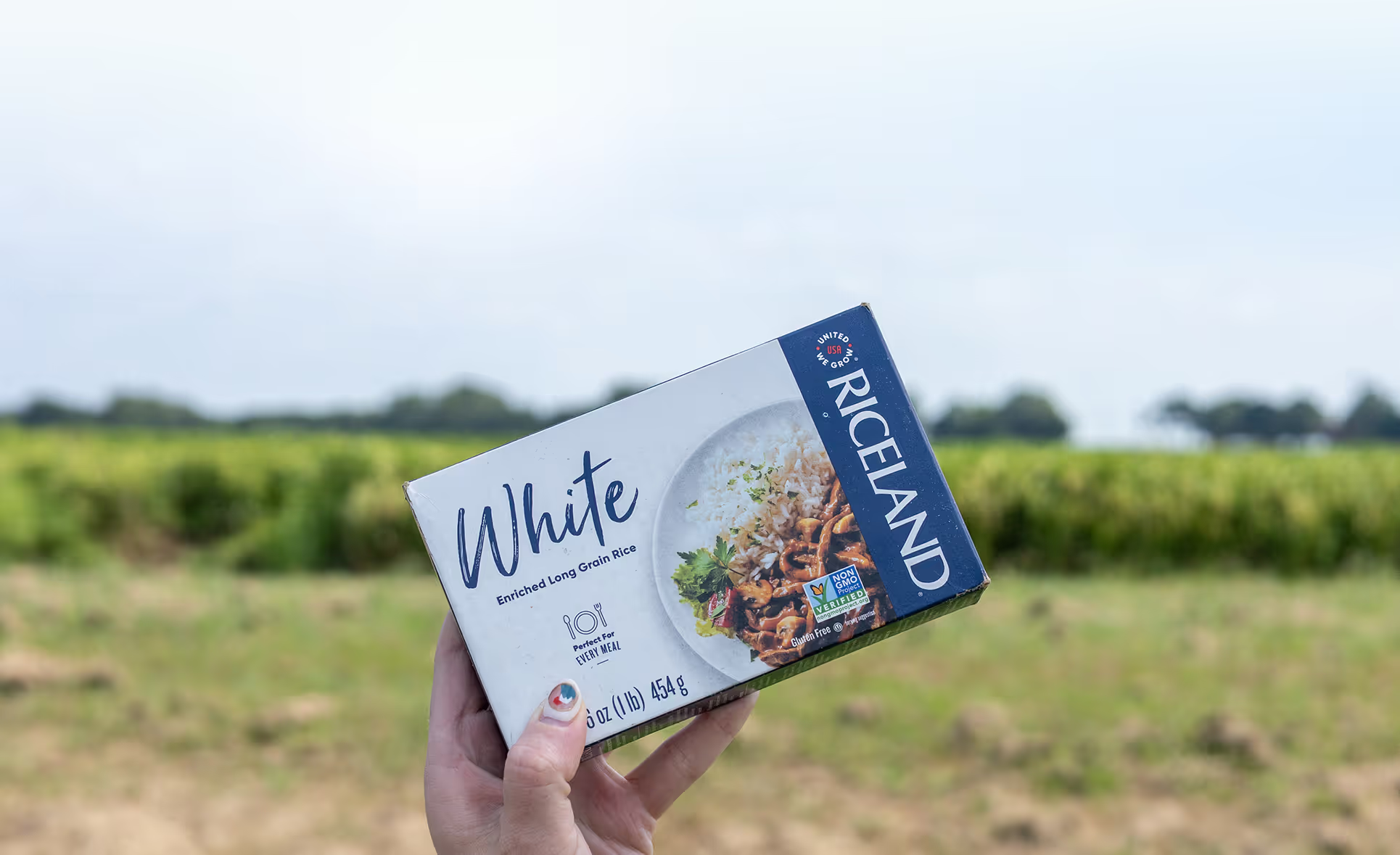

Menu Flexibility for Every Operation
In today’s foodservice landscape, flexibility isn’t a bonus, it’s a requirement. Operators across both commercial and non-commercial segments are being asked to do more with less: fewer SKUs, tighter labor, shifting consumer expectations, and ongoing cost pressures. One ingredient continues to meet those demands across every type of operation: rice.
According to Datassential, more than 70% of operators say menu versatility and cross-utilization are critical to managing rising costs1, making adaptable staple ingredients more valuable than ever. Rice can meet these needs and deliver across service styles, volume requirements, and menu formats.
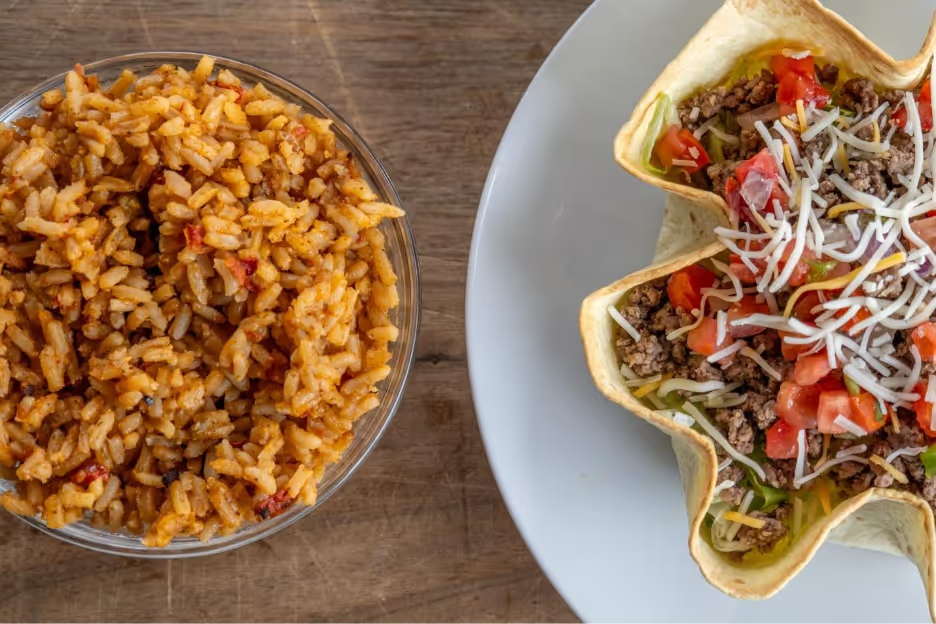
Rice in Commercial Foodservice: Built for Variety and Speed
From restaurants to catering, commercial foodservice menus are driven by choice, operational efficiency, and crave ability. Rice supports these needs by acting as both a foundation and a feature.
Key advantages for commercial operators include:
- Menu versatility: Rice appears across multiple menu categories, from bowls and plated entrées to soups and sides. Technomic reports that bowls are one of the fastest-growing menu formats, with rice frequently serving as the base.2
- Global flavor compatibility: Global cuisines continue to influence U.S. menus, with Asian, Latin, and Mediterranean flavors ranking among the top growth drivers. 3 Rice allows operators to introduce these flavors with a low operational risk.
- Operational efficiency: With ongoing labor shortages, ingredients that batch cook and hold well matter. The National Restaurant Association reports that 70% of operators say staffing challenges continue to impact operations4, increasing the need for reliable, low-touch ingredients.
- Value perception: Rice helps balance plate costs while maintaining portion satisfaction, an important factor as food costs remain elevated across proteins and produce.

For commercial kitchens focused on speed and scalability, rice offers flexibility without sacrificing performance or consistency.
Rice in Non-Commercial Foodservice: Reliable, Inclusive, and Scalable
Non-commercial foodservice, including schools, healthcare facilities, senior living, and corporate dining, requires a different approach. Here, nutrition standards, dietary needs, and volume consistency are critical.
Rice supports non-commercial operations by offering:
- Dietary inclusivity: Riceland rice is naturally gluten-free, aligning with the growing need for allergen-aware menus. The CDC estimates that 1 in 100 Americans has celiac disease, with many more avoiding gluten by choice.5
- Portion control: Rice provides a measurable base that can support standardized serving sizes.
- High-volume performance: In institutional settings, consistency matters. Rice delivers dependable yield and texture across large-scale production, reducing waste and rework.
- Menu familiarity: Familiar foods drive participation. Studies in K–12 and healthcare dining show that recognizable, comforting dishes improve acceptance and reduce plate waste.6
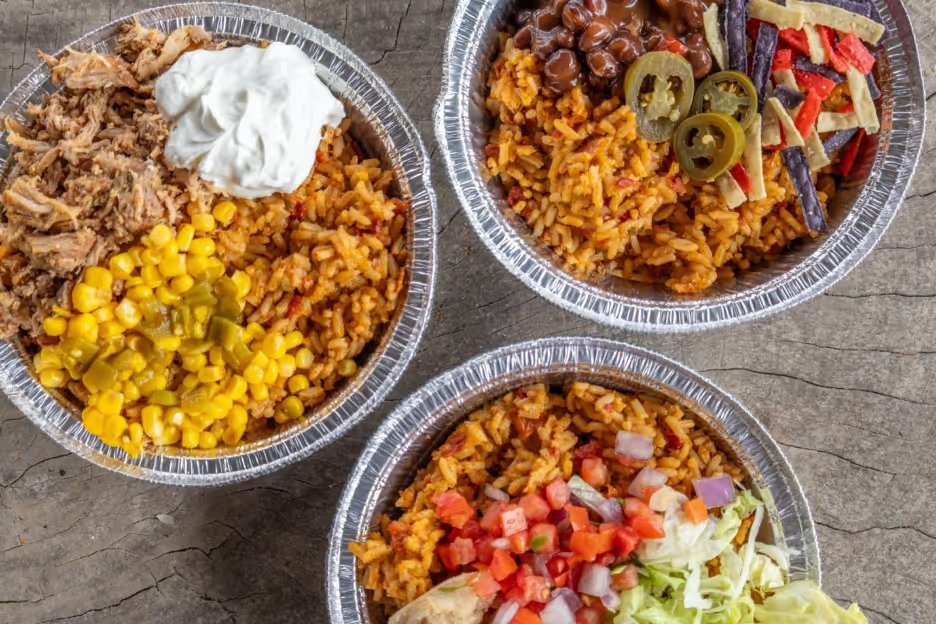
In environments where predictability and reliability are essential, rice delivers a solution operators can count on.
One Ingredient, Two Worlds—Endless Applications
What sets rice apart is its ability to bridge both segments without compromise. Distributors and suppliers benefit from carrying an ingredient that meets the needs of:
- Fast-paced commercial kitchens
- Structured non-commercial operations
- Multiple cuisines, service styles, and volume requirements
_ARVA_2026-32.avif)
As operators look to simplify purchasing while maintaining menu flexibility, rice continues to stand out as a high-performing, multi-application staple.
A Flexible Foundation for Foodservice Success
As menus continue to evolve, rice remains a constant, adaptable enough for innovation, dependable enough for daily service. Whether the goal is speed, portion sizing, cost control, or consistency, rice offers the flexibility foodservice operations need to succeed across every channel.
For commercial and non-commercial foodservice alike, rice isn’t just an ingredient, it’s a strategic menu solution.
Partner with Riceland
At Riceland Foods, we work directly with foodservice partners to deliver consistent, U.S. grown rice solutions designed for real-world kitchens across both commercial and non-commercial operations.
Explore our new Foodservice B2B page to learn more about our rice offerings, applications, and support resources, or connect with our team to discuss how Riceland can help meet your operational, menu, and supply needs.
Sources:
1 Datassential, Menu Trends & Operator Priorities, 2025
2 Technomic, Bowl & Global Menu Trends, 2024
3 Datassential, Menu Trends & Operator Priorities, 2025
4 National Restaurant Association, State of the Restaurant Industry Report, 2024
5 Centers for Disease Control and Prevention (CDC), Celiac Disease & Gluten Sensitivity Data, 2023
6 United States Department of Agriculture (USDA) Food and Nutrition Services, School Nutrition and Meal Cost Study, 2024; National Institutes of Health (NIH), Getting a Taste for Food Waste, 2014